
Population Health Activation for Neighbourhood Teams
Steps Health helps Integrated Neighbourhood Teams and PCNs identify people at rising risk, support them with personalised self-management and share meaningful data with their clinical teams.
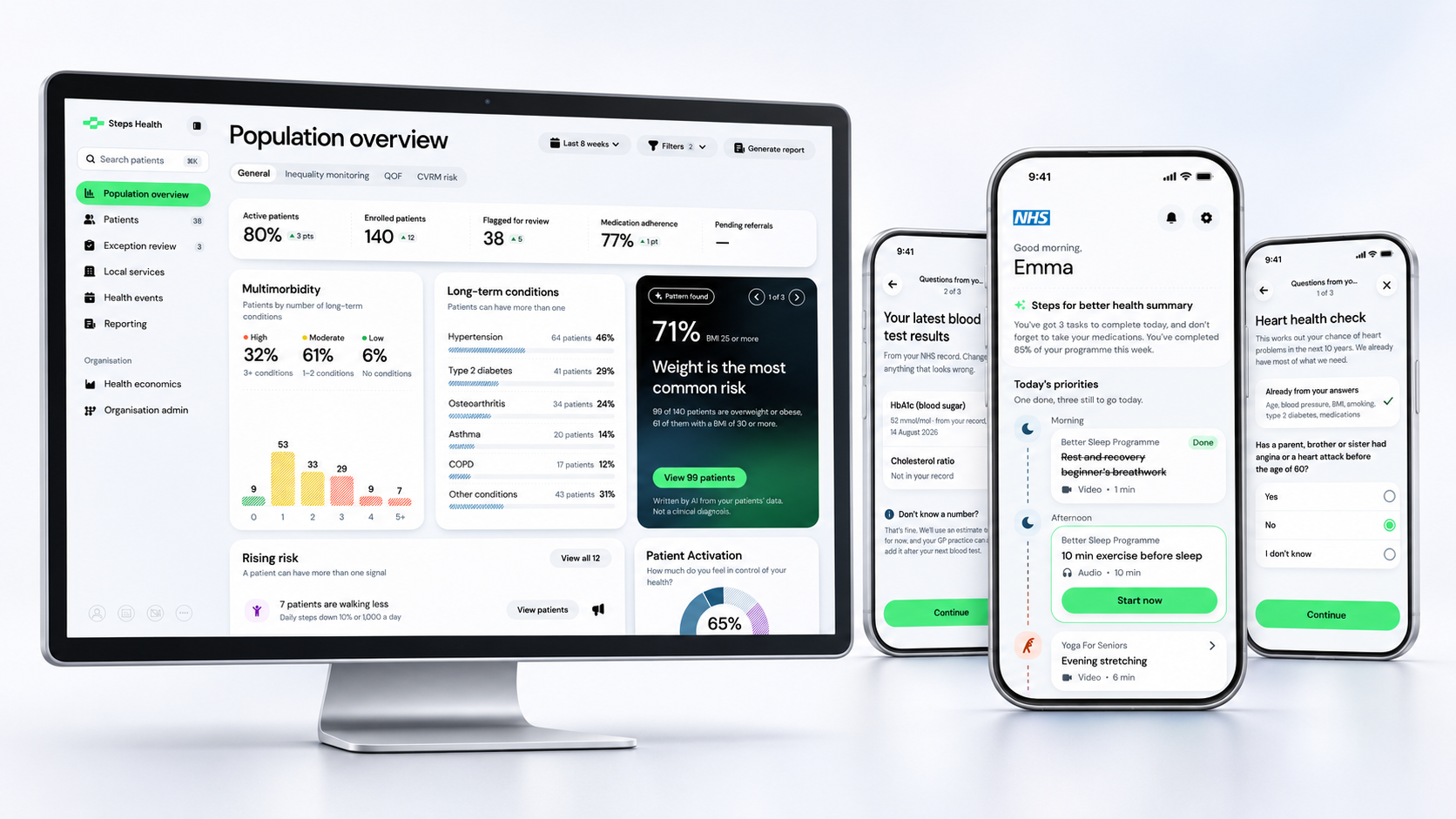
Neighbourhood health needs care that continues beyond the clinic
The Neighbourhood Health Framework asks local systems to strengthen proactive care, reduce health inequalities and keep people well at home. For teams supporting people with multiple long-term conditions, that means reaching more people earlier, without adding to clinical workload.
Identifying patients at risk is only the beginning. Delivering on the NHS Neighbourhood Health Framework means turning population health intelligence into proactive, personalised care closer to home. While population health platforms identify need and EHR systems support clinical care, Steps Health provides the intelligent patient activation layer that connects insight to action, enabling neighbourhood teams to extend personalised support across their populations.
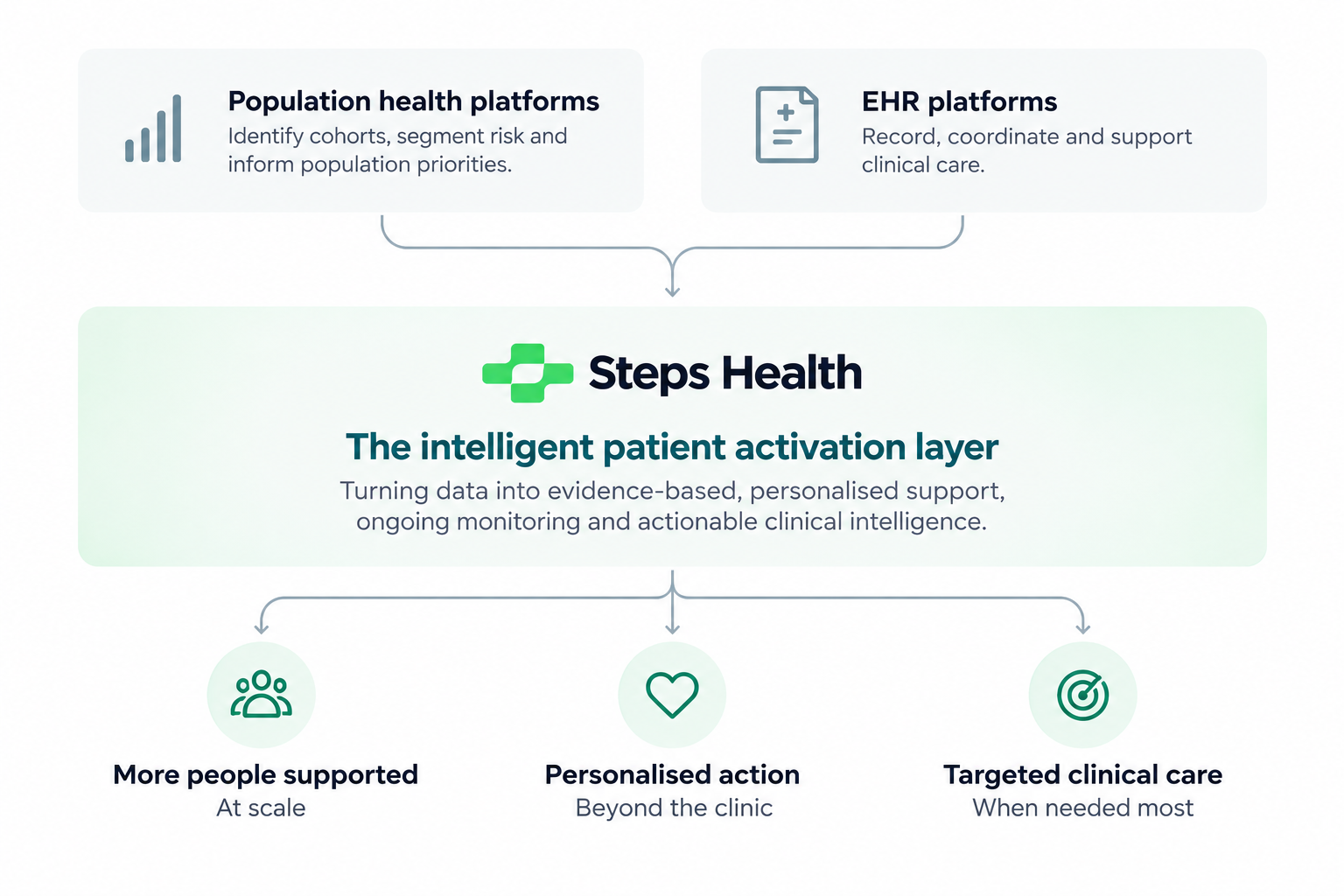
A closed loop for proactive care
By combining connected health data, AI-driven personalisation and evidence-based self-management, we enable more people to take an active role in their health, while helping clinical teams identify those who need additional support. The result is a scalable, patient-led but clinician-connected approach to prevention and long-term condition management.
- 01
Identify
Find rising-risk and established-risk cohorts using practice data, demographics and deprivation indices.
- 02
Activate
Invite patients to build a personalised self-management plan that adapts to their progress.
- 03
Close the loop
Data and progress is securely shared with clinical teams to support timely action.
- 04
Learn
Track health, engagement, inequality and economic impact at individual and cohort level.
Evidence-based, personalised and adaptive action
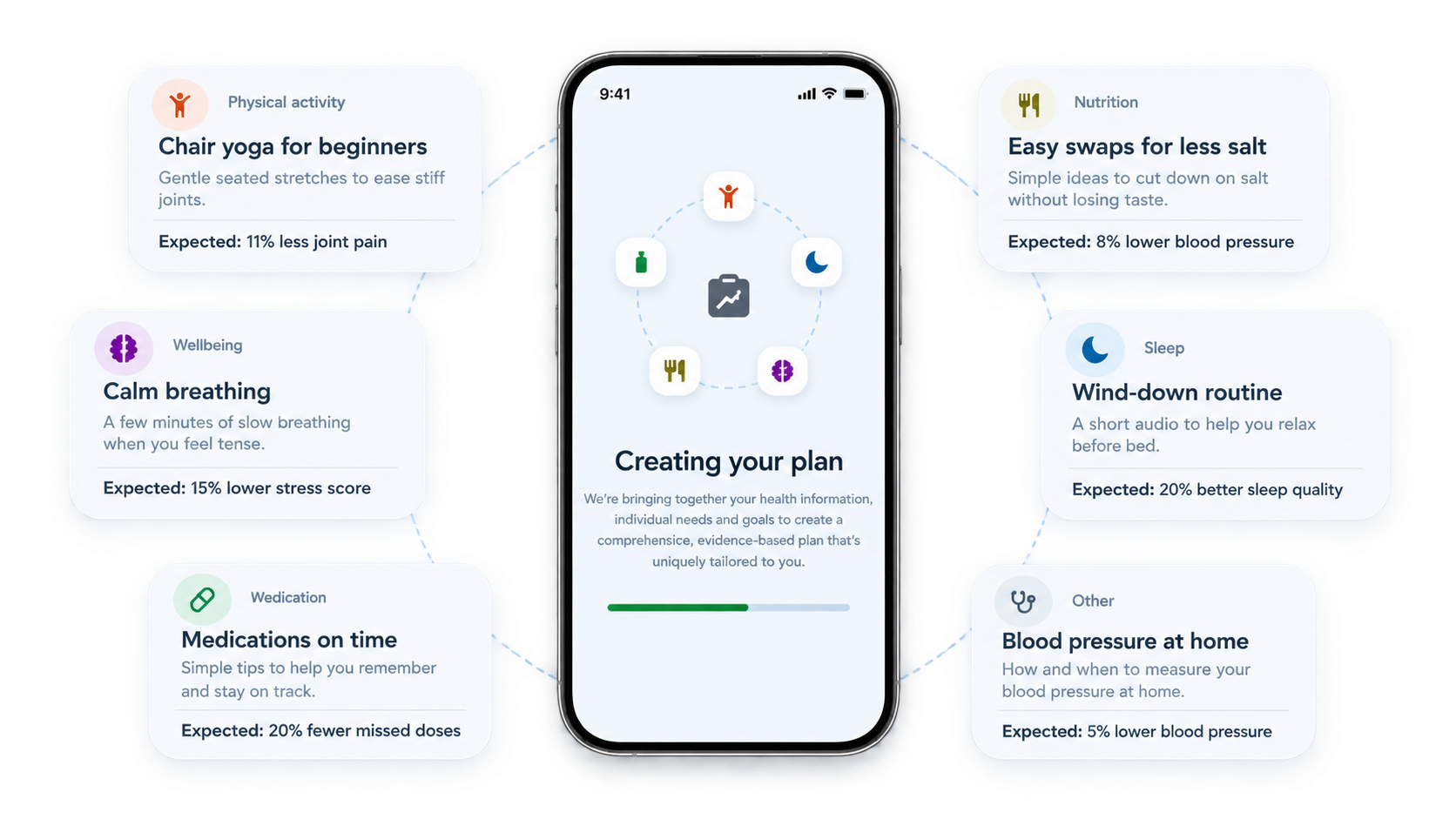
Steps uses individual health information to deliver personalised, evidence-based self-management programmes across six complementary health domains, alongside medication adherence support.
Programmes are informed by each person's health profile and can adapt as new information becomes available.
Six domains
Physical activity, psychological wellbeing, nutrition, sleep, other health behaviours such as smoking cessation, and medication adherence where relevant.
Adapts every two weeks
Plans update using changes in health data, effectiveness and engagement, drawing on more than 300,000 unique evidence-based programme combinations.
Works with their wearable
Connects to any wearable through Open Wearables.
Insights
The platform understands which behavioural drivers are having the biggest impact, and presents personalised insights back to the patient.
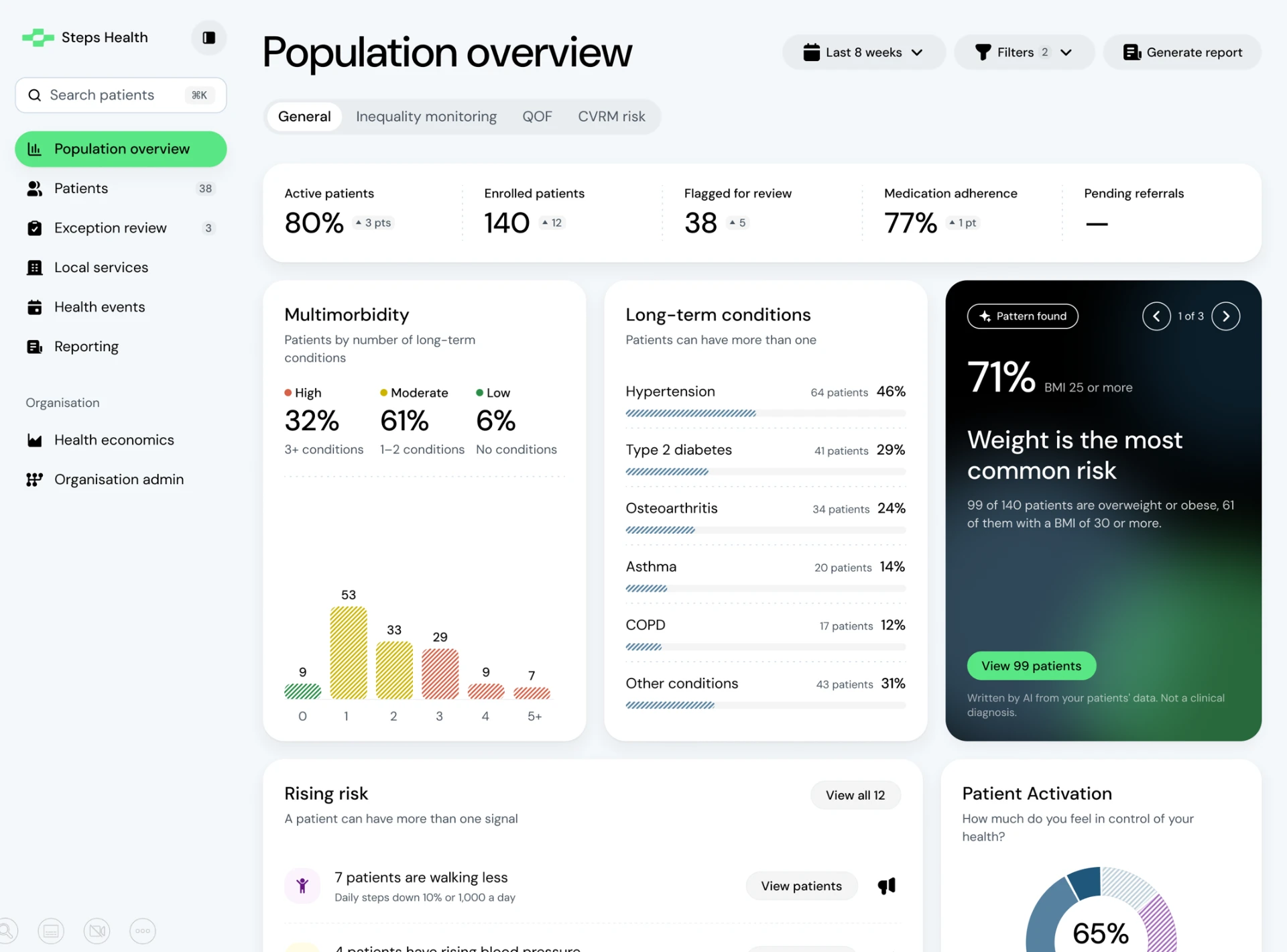
Insight your team can act on
Our clinical dashboard gives neighbourhood teams real-time visibility of patient engagement, health outcomes and changing risk across individuals and populations. Teams can identify those needing additional support, monitor health inequalities, track service performance and assess potential economic impact, enabling more proactive, targeted and effective care.
Population and patient detail
Move from a whole-population view to individual patient detail, with real-time visibility of progress, risk and future care needs.
Identify rising risk
Review worsening activity, BMI, step cadence or mental health scores to inform targeted interventions.
Monitor inequalities
Use demographic insights to target support and monitor inequalities, aligned to Core20PLUS5.
Evaluate economic impact
Explore patient activation, health-related quality of life and healthcare utilisation through economic modelling.
Connect to local services
Your clinical team decides between self-directed support through Steps Health and local services.
Report on your programmes
Access population and programme reports in the dashboard or receive reports through NHS MESH. QOF reporting is coming soon.
Built for multiple conditions
Steps Health supports people living with long-term conditions and those at risk of developing them.
- Hypertension
- Hyperlipidaemia
- Cardiovascular disease
- Heart failure
- Type 2 diabetes
- Pre-diabetes
- Obesity / weight management
- Chronic kidney disease
- Mental health (depression, anxiety, stress)
- Chronic pain (fibromyalgia)
- Chronic fatigue / long COVID
- Pre-op prehab
- Prehab: waiting list for surgery
- Prehab: newly diagnosed with cancer
- COPD or chronic lung condition
- IBS (diagnosed)
- Osteoarthritis
- Low back pain
- Frailty or falls
- Osteoporosis
- No condition (rising risk)
From agreed cohort to active support
Getting started with Steps Health is simple. We work alongside your clinical team to set up your service, identify the patients you want to support and make onboarding easy. With integration into existing NHS systems already in place and minimal additional demands on staff, your team can quickly start delivering personalised care at scale.
- 1
Agree the scope
Choose cohorts, conditions and outcomes with your team.
- 2
Review governance
Review the supplied DTAC, DSPT and clinical safety documentation.
- 3
Confirm the pathway
Organisation code and training provided. Local services added and integration preferences confirmed.
- 4
Invite patients
Practices can invite patients through Accurx, with onboarding in the app.
- 5
Go live and evaluate
Track patient engagement and outcomes through the dashboard or programme reports.
Connected to your NHS workflow
Steps is designed to complement existing NHS infrastructure and provide a more connected experience for patients and clinicians.
NHS Login
Patient sign-in through NHS Login.
Patients Know Best
Connection with Patients Know Best.
NHS MESH
Share reports with clinical teams through NHS MESH.
NHS dm+d
NHS dictionary of medicines and devices support.
FHIR
FHIR UK Core R4 architecture for structured health data exchange.
Clinically governed by design
- Class I UKCA-marked, MHRA-registered medical device
- NHS DTAC in place
- Cyber Essentials Plus
- Data Security and Protection Toolkit (DSPT)
- DCB0129 clinical safety
- ISO 13485 quality management system
- NICE and medical guidelines used as safety guardrails, excluding unsuitable interventions for each condition
- Algorithms and programmes approved by a clinical advisory board
- Multidisciplinary clinical team, with a named Clinical Safety Officer
- Hosted in the UK on AWS London
- Invite-only access through an organisation code
Your questions
Does Steps Health replace our clinical services?
No. Steps Health is a digital provider that extends care beyond the clinic. It does not deliver face-to-face services.
Does it monitor patients or send clinician alerts?
Steps Health provides real-time monitoring of patient progress and changing risk through the clinical dashboard. It does not diagnose, send clinician alerts or provide urgent care, and does not imply continuous oversight by a clinician. If higher-risk red flags appear, the patient gets clear instructions to seek help.
How do patients join?
Through an invitation linked to your organisation. They can sign in with NHS Login or create a Steps Health account.
Do our clinicians have to use another dashboard?
No. Teams can use the dashboard or receive reports through NHS MESH.
Is it suitable for large populations?
Yes. The platform is designed for large populations and covers multiple conditions on one platform.
Planning your neighbourhood health model?
Tell us about your population and priorities, and we'll explore how Steps Health could support them.